Wednesday, April 13, 2016
My first time calling into a radio station...
My first for today - I called a radio station (K-LOVE). They
did a news bit about the annual "dirty dozen" list that is published
every year, listing the produce with the most pesticide residues.
This is a prime example of fear-based marketing. The list
should preface in big bold letters: None of these foods (not even the #1) pose
risk to your health.
Here's just one fact to help you sleep better at night: If a
CHILD ate 1,500 strawberries in ONE day (strawberries were #1 on the list),
they wouldn't have any impact from residue.
Another flaw: "the list will always have twelve items
on it. If farmers increased their pesticide use by a million times overnight,
or if they abandoned pesticides in droves, next year's list wouldn't reflect
the change in your ACTUAL risk. It would still be a dozen items long."
And a third (because I just can't stop myself): Organic
farmers use pesticides too - there's a whole list approved for them to use. The
difference is that they're derived from natural sources, but still toxic,
nonetheless (otherwise they wouldn't kill the pests). This list does NOT
account for organic pesticide residue because the USDA does not test for them.
So there's no way to know at this point whether organic produce has more or
less pesticide residue.
The three facts above were derived from the following two
links - I encourage you to read even more:
- http://www.foodinsight.org/dirty-dozen-pesticides-2016-list-problems-facts
- http://vitals.lifehacker.com/why-you-shouldnt-buy-organic-based-on-the-dirty-dozen-1689190822
My 40-minute drive this morning was statistically much
riskier to my well being than any produce could be.
While I didn't get on the air, I hope maybe the djs will
think twice before continuing to give such false information a national
platform. After all, the truth will set us free. In this case, free from guilt,
worry and fear.

Thursday, February 4, 2016
Ben Nelson, DIY Extraordinaire
I had to stop and admire Ben's DIY abilities this week on two main projects that are going on. Also, definite props to all the guys who are part of all these "little" projects at various stages.
- Bathroom remodel (pictures will come later - this is just a list of my handyman's work)
- Demolition of existing tub, wall and some of the ceiling that had water damage
- Built new walls in a new spot for the larger whirlpool tub, including a shelf all around the tub and a three-shelf inset for shampoo bottles
- Ran all new plumbing for the new location of the shower and bathtub faucets
- Installed and wired inset lights and wired a new fan and the motors for the whirlpool tub
- Installed the new tub
- Re-vented our clothes dryer (note - this was a rabbit-trail to-do item because we discovered that was the cause of the damaged ceiling drywall)
- Tiled the floor and tub/shower wall (what a task with SOOO many steps!)
- Smoking meat
- Built a smoker with a group of guys a few years ago - yes, they built a humongous smoker - probably 7' tall and 4' sides
- Went to Colorado and shot an elk - DIY bow hunt - packed out all the meat and cut it up himself (with Don Friemoth's help!)
- Got two live pigs delivered that he and his dad processed
- Ground the meat and mixed in all the spices
- Smoking it - eating it!
He is really talented in a lot of things. To be honest though, he didn't know how to do 75% of the things on this list. He just learns as much as he can and then goes for it. He's very ambitious and willing to tackle new things when it comes to hands-on projects. It doesn't always go smoothly - like he had to spend probably five hours cleaning the mortar between the tiles instead of 30 minutes if he would have done it before it set. Lesson learned.
All the hard work is always worth it in the end. Much more of a "Pinterest" project than I could ever handle!
Friday, October 23, 2015
Who are you going to trust?!
Oh man, are things muddied up this week by Subway's announcement that they will start using meat from animals that have never been giving antibiotics. Not only that, but they are DELETING comments from people who are making reasonable statements questioning their decision.
I'm pretty sure that even the untrained eye can see what this really is - a public relations maneuver.
July 2015, huge fall out from Jared Fogel scandal. October 2015, this bandwagon decision following a few other restaurant chains. Connect the dots, and you have a case-study for entry-level marketing students.
Here's what it comes down to: who are you going to trust?
So we turn to our good friend, Google.
Including me.
I am a farm gal, but most of my experience and understanding is in dairy and crops. This topic is more about poultry and beef.
So I took to googling information just like anyone else.
Five things I found:
I'm pretty sure that even the untrained eye can see what this really is - a public relations maneuver.
July 2015, huge fall out from Jared Fogel scandal. October 2015, this bandwagon decision following a few other restaurant chains. Connect the dots, and you have a case-study for entry-level marketing students.
Here's what it comes down to: who are you going to trust?
So we turn to our good friend, Google.
Including me.
I am a farm gal, but most of my experience and understanding is in dairy and crops. This topic is more about poultry and beef.
So I took to googling information just like anyone else.
Five things I found:
- It would take days, weeks, months, years to even come close to the collective level of understanding that the agriculture and medical community have. I am NOT in any position to understand all the ins and outs of the antibiotic use and whether there's any connection to resistance.
Here's a comparison this is not meant to be offensive at all, but is something I think a lot of us can relate to. It's like childless people who claim wisdom in parenting decisions and methods. I'm a cattle-less, bird-less person who is humble enough to admit that I don't know how they should raise their animals.
If you are interested in getting a basic introduction to this topic, there are a lot of blog posts available about the topic. Also, many farmers and ranchers and veterinarians would welcome the opportunity to share and answer questions. People love to talk about their passion and share it with others. You just have to take the time to ask openly and kindly.
- These sorts of announcements paint it as an "us" versus "them" topic, but that isn't the case. It's a round table, not a rectangle one. We are all in this together - all wanting healthy food that is readily available at affordable prices to nourish our bodies and souls.
- Nothing in this world is perfect. However, I will put my odds on the agriculture community - including ALL sizes and styles. It's a community that has salt-of-the-earth people throughout. Not perfect (nothing is), but the highest integrity steering them.
- Marketing is a powerful tool. As the receivers of marketing, it's up to us to filter the marketing tactics with a strong mind. I was just talking to someone recently about how one of the highest-used marketing methods is fear-based. I know I've been victim to fear-based marketing messages at times. Be on guard.
- I trust God with all of it. With my own personal health and food decisions, that He is steering our food producers and that everyone around the table will be patient and understanding of one another. Matthew 6:25-34
Tuesday, October 20, 2015
Highlights of soybean harvest 2015
For all you farmers out there, our total farm average looks like 56 bushels/acre, which is pretty consistent with what we've been getting the past few years. Some fields went as high as 65 and the low end was 45. The couple fields on the low end seemed to have a lot of white mold.
Now that we got that out of the way, here are a few highlights of soybean harvest 2015:
 1. It went fast! 540 acres harvested in about seven days.
The guys have sort of a running discussion every year of whether they prefer to harvest beans or corn. From my perspective, I like beans better because of how quick it can be. Also, beans can only be harvested during a certain time of the day, so it makes for more reasonable hours. They take on moisture from the air, so they become "tough" for the combine to handle after dark and need to dry out in the morning. Similar to mowing lawn - the grass just doesn't cut nicely unless it's dried out. Of course there's still maintenance that needs to be done every day, so they're still really long days. Just not like corn where you literally could keep going day and night until it rains.
 2. No major breakdowns.
With so much equipment (two combines, three grain trucks, auger to fill the bin) and it's all running for a LOT of hours, there's bound to be things that wear out and break. The question is always the scale of the breakdowns. There weren't any major ones during soybean harvest, so the guys were able to press on every day.
This picture is what Ben found when he emptied his rock trap the last day - a deer antler! That's a rare find! The rock trap is REALLY important when combining soybeans. The bean pods are all the way up the stem of the plant, so you need the combine to cut it off as close to the ground as possible so you don't miss any beans. That creates a potential for rocks to come into the machine. If a rock went past the rock trap, the whole machine would basically become scrap metal because of how much damage it would do. Yikes!
 3. Fall in Wisconsin. Need I say more?
It's been a gorgeous week to spend out in a field! The girls and I didn't get out there all that much during soybean harvest, but the times we did was a lot of fun. I got to run the weigh wagon that we were borrowing to get accurate results of our tests. Molly (2 years old) confirmed that she is still freaked out of the loud noises from the equipment. However, she LOVED playing in the pile of beans that was accidentally spilled. With a crop farm, there aren't as many tasks that the whole family is involved in, so we take advantage of the fieldwork that is conducive to us tagging along. We're glad that we still have corn harvest to look forward to so we can spend even more time out there.
 4. I get to analyze!
I'm such a nerd. I enjoy creating spreadsheets to analyze data. We had two soybean tests this year. One was just a plot to test different types of seed. We haven't done one in several years, so it was a good exercise to compare the options side-by-side. This is especially important while margins are tight right now to make sure we are maximizing our profit potential. The other test was to compare different planting methods and see if we want to invest in a new planter. It would be nice to take more time in the slower winter months to do these sorts of things, but the seed companies give the best discounts if you order early because it helps them plan and assess their inventory. Once again, it's important to take advantage of this to maximize profit potential with tight margins. We have to balance the rush of earlier purchases with the need to still analyze the information to make good decisions. (more information about the tests to compare planting methods will come in a later post...)
They finished beans on Saturday, spent Sunday afternoon and all day Monday getting equipment switched over to corn. It was supposed to rain last night into today. I asked Ben what he thought of the possible rain day. He responded that he is excited to put all the tools away. Excited to put the tools away?! I had to make sure my jaw wasn't hanging open. He generally thrives in a state of disarray... Things must really be bad if he is looking forward to cleaning of any sort!
Alas, clear skies this morning so they are picking corn. Putting tools away will have to wait!
Now that we got that out of the way, here are a few highlights of soybean harvest 2015:

The guys have sort of a running discussion every year of whether they prefer to harvest beans or corn. From my perspective, I like beans better because of how quick it can be. Also, beans can only be harvested during a certain time of the day, so it makes for more reasonable hours. They take on moisture from the air, so they become "tough" for the combine to handle after dark and need to dry out in the morning. Similar to mowing lawn - the grass just doesn't cut nicely unless it's dried out. Of course there's still maintenance that needs to be done every day, so they're still really long days. Just not like corn where you literally could keep going day and night until it rains.
 2. No major breakdowns.
With so much equipment (two combines, three grain trucks, auger to fill the bin) and it's all running for a LOT of hours, there's bound to be things that wear out and break. The question is always the scale of the breakdowns. There weren't any major ones during soybean harvest, so the guys were able to press on every day.
This picture is what Ben found when he emptied his rock trap the last day - a deer antler! That's a rare find! The rock trap is REALLY important when combining soybeans. The bean pods are all the way up the stem of the plant, so you need the combine to cut it off as close to the ground as possible so you don't miss any beans. That creates a potential for rocks to come into the machine. If a rock went past the rock trap, the whole machine would basically become scrap metal because of how much damage it would do. Yikes!
 3. Fall in Wisconsin. Need I say more?
 It's been a gorgeous week to spend out in a field! The girls and I didn't get out there all that much during soybean harvest, but the times we did was a lot of fun. I got to run the weigh wagon that we were borrowing to get accurate results of our tests. Molly (2 years old) confirmed that she is still freaked out of the loud noises from the equipment. However, she LOVED playing in the pile of beans that was accidentally spilled. With a crop farm, there aren't as many tasks that the whole family is involved in, so we take advantage of the fieldwork that is conducive to us tagging along. We're glad that we still have corn harvest to look forward to so we can spend even more time out there.
 4. I get to analyze!
 I'm such a nerd. I enjoy creating spreadsheets to analyze data. We had two soybean tests this year. One was just a plot to test different types of seed. We haven't done one in several years, so it was a good exercise to compare the options side-by-side. This is especially important while margins are tight right now to make sure we are maximizing our profit potential. The other test was to compare different planting methods and see if we want to invest in a new planter. It would be nice to take more time in the slower winter months to do these sorts of things, but the seed companies give the best discounts if you order early because it helps them plan and assess their inventory. Once again, it's important to take advantage of this to maximize profit potential with tight margins. We have to balance the rush of earlier purchases with the need to still analyze the information to make good decisions. (more information about the tests to compare planting methods will come in a later post...)
They finished beans on Saturday, spent Sunday afternoon and all day Monday getting equipment switched over to corn. It was supposed to rain last night into today. I asked Ben what he thought of the possible rain day. He responded that he is excited to put all the tools away. Excited to put the tools away?! I had to make sure my jaw wasn't hanging open. He generally thrives in a state of disarray... Things must really be bad if he is looking forward to cleaning of any sort!
Alas, clear skies this morning so they are picking corn. Putting tools away will have to wait!
Monday, June 22, 2015
My farmer dad...
 |
| My younger sister Kayla asked to write a guest post for Father’s Day. The middle sister of three, she’s the only one of us no longer involved directly in production agriculture. Still, she fondly remembers our upbringing on the farm and the values that our dad instilled. |
If asked to describe my father in one word, the answer would
be simple: “farmer.” Of course he’s a multi-dimensional man who could be
described in many ways, but his title as a farmer is so much more than an
occupation; it’s a title that encompasses his worldview, character and
relationships. In fact, as his daughter, I would be hard-pressed to separate
our relationship from the farm. Nearly all of my memories of our interactions
have been framed by his role as a farmer.
As a young child, I rode along in the tractor and talked his
ear off in an effort to keep him alert. As I grew older, those conversations
continued during milking. He listened to my hopes and dreams and encouraged me
that I could do anything I put my mind to.
Beyond conversation, though, he molded my character most
through his example. In good years, I watched him fill silos, bags and hay mows
to the brim to save for worse times. During
downtimes, I learned about the trials of running a business, but also learned
to stay the course and trust in God. He taught us to ‘make hay when the sun
shines’ and to embrace rainy days to catch up on sleep. Even after eighty hour
work weeks, he could always make time to pull a stranger out of the ditch or
plow a neighbor’s driveway.
Life on the farm wasn’t always smooth. I’ll be the first to
admit that I often resented the work. When my siblings and I made mistakes,
oftentimes the lines were blurred between employees being reprimanded and
children being disciplined. Although Dad was a hard task-master, he also showed
compassion against the backdrop of the farm. I vividly recall running off to
the pig pen to cry after being scolded for some petty offense. As we watched
the young piglets rooting through fresh straw, he apologized for hurting my
feelings showed me mercy.
By modern standards, Dad was (and is) a workaholic. He was such
a perfectionist that it pained him to allow hired-help to run things while he
was away. A family vacation was usually followed by a drop in milk production.
Watching us show animals at the county fair meant leaving dry hay lay in the
field. Honestly, it was understandable that he didn’t want to entrust his farm
to anyone else. Yet if it was for his children, he made the sacrifice.
As I’ve grown to be an adult myself with a career and two
young kids to feed, those nostalgic memories have grown into deep respect. I am
grateful that I have an on-going connection with my farmer dad, through which I
can better understand the many complexities that play into the decisions and
techniques that are used on farms. I have grown even more proud of the
responsibility he shows through how he cares for his animals and land. And I am
immensely grateful that my two kids get to be there regularly to be part of
that same upbringing.
Friday, May 8, 2015
"Playing it by ear." - a tribute to my mom
 |
| Me, my mom and my sister. Photo was taken while we were celebrating Mom's 50th birthday in Nov. 2014. |
This is also a day when some people are filled with longing for their mothers/children who've passed away or the longing to be a mom, some struggle with estranged relationships with their mothers/kids, some are overwhelmed with the physical and emotional exhaustion of motherhood, etc. etc. No mom is perfect - cut your mom a break, and cut yourself a break. If you're harboring any struggle with bitterness or shame, let this be a day for God's grace to wash that away.
Special virtual hug to all farm moms, because there's a good chance you're a "spring widow" on Mother's Day, and the emotions of that hit even harder coupled with the exhaustion of planting season setting in.
The past five years of Mother's Day have meant all kinds of emotions for me. They've been my first times to celebrate that I'm a mother. This new experience and perspective has exposed the reality of all the gratitude and apologies I owe to my mom. They've also shown me the reality of this role - 24/7, sacrificial and full of non-monetary rewards. (That list is so similar to farming - 24/7, sacrificial and full of non-monetary rewards. But this post isn't really about farming...)
There are so many things I now learn from my mom's example as a farm wife. Respecting her husband, supporting his calling, being involved in his calling but with her limits and boundaries for her own sanity and self-fulfillment. The last two weeks, I've embraced something from her that I never thought I would..."playing it by ear."
I don't know if I've ever heard anyone else say that phrase like my mom. In fact, I'm not sure of whether it's a common phrase or if it's just common within our family. (In case it's just us, it means that we won't set a plan for what or when we'll do something, we'll just see what happens when the time comes.) I must have heard her say it thousands of times growing up, and I always thought she was just anti-scheduling and anti-commitment.
I, on the other hand, like to have a plan and stick to it. It drove me crazy that we never set our plans. Not only because I wanted to know what was coming and plan for it, but also because I thought we seemed rude, uncaring, unprofessional.
Now I get it. Don't set the plans because then no one will be as upset when they change. When your life revolves around things like the weather and breakdowns, plans are bound to change at a moment's notice.
It's hard to truly appreciate someone until you "walk in their shoes." That is the case when you have your own kids, and only then do you truly realize what your parents did for you. I'm so grateful to be a farm wife and have this unique opportunity to appreciate what my mom did (does) as a farm wife. I continually ask her questions and seek her advice from the perspective of this role.
So what will I be doing on Mother's Day? We'll play it by ear... :)
Wednesday, April 29, 2015
Economic Sustainability
Other posts in the sustainability video series:
Transcript of the video audio (in other words, here's the text version of everything I said in the video)
When it comes to economic sustainability for the farm, the
first thing that comes to mind is the financial risk we take every year. We
commit all the expenses for the crop months before any tractors even hit the
fields in the spring. And then it’s obviously months later until we see how the
yields are going to do. And then it’s months even after that until we make the
final sale of the crop because we have on-site storage. So that’s an average of
around 18 months from hwen we spend the first penny and then months later when
we receive the final penny for the crop.
And in between the expense and the profit side of things,
there are some big variables that play into the profitability. One obviously is
the weather – that’s a huge one – as well as different pests and diseases that
are damaging crops potentially. And then the markets – seeing how the actual
sale price is doing and the fluctuations in that will obviously affect
profitability.
So there’s different business models for every farm. The way
our farm is structured and we’re able to maintain profitability is to have a
low cost-of-production. That really helps so that whenever we’re putting in a
crop, we try to keep our expenses as low as possible. So even if we do have a
drought like 2012 or if the market has a downturn like it does right now, we
can still be profitable through those years.
What that looks like on our farm when it comes to low
cost-of-production, you can mostly see that with the equipment we use. All of
the equipment on our farm is decades old. Even when we get a “new” piece of
equipment, it’s still very old. And then the guys spend all winter doing all
the maintenance and repairs themselves for the equipment. They’re very talented
that way. They’re very mechanical. My father-in-law also went to college for
mechanical engineering so they even do some major modifications to equipment
that will save them from having to buy that equipment or buy the modification.
It saves them a lot of money that way, and that obviously helps the budgeting
aspect of what we do.
It might be easier for me though if they had the nice, new
tractors that are easier to drive. Instead we have these tractors that all have
their own tricks to them, so it makes it tricky for me. But in the end, I guess
it’s best for the farm.
And we joke around a lot that there’s no need for us to ever
go to a casino because we’re gambling enough every day as it is here on the
farm.
So, that’s economic sustainability for us here on the farm.
Thank you.
Wednesday, April 22, 2015
Environmental Sustainability
Sustainability video series:
Happy Earth Day! In honor of Earth Day, today's sustainability video message revolves around the broad meaning of environmental sustainability to our farm.
Transcript of the video audio (in other words, here's the text version of everything I said in the video)
Happy Earth Day! In honor of Earth Day, today's sustainability video message revolves around the broad meaning of environmental sustainability to our farm.
Transcript of the video audio (in other words, here's the text version of everything I said in the video)
Environmental sustainability. I don’t know of many
businesses that are as intertwined with the environment like we are as farmers.
We do something to the environment and then it reacts and responds and provides
something back to us in return. That interaction and engagement is so vital to
a lot of the decisions we make of what we do and how we do it.
That often leads to the question of why do we just raise
crops on our farm here in southeast Wisconsin near the Illinois border.
And it brings me back to a conversation I had a few weeks
ago with our five-year-old daughter. We were at Cabela’s looking at all the
fish and we started talking about how the fish are different – the ones that
live in the ocean versus lakes versus rivers versus streams. And we talked
about how the fish have been purposely created to be suited to those specific
environments.
And that’s what we have a lot here in the Corn Belt. The
whole Midwest part of the United States – and we’re just in the edge of that –
is very well-suited to growing crops like corn and soybeans. Our land is very
flat, which reduces the risk of soil erosion and run-off. Our climate is very
well-suited and our soil is very fertile and supports those different crops.
Now that’s not to say that there aren’t farms in our area
and throughout the Corn Belt that do other things. And we’re very grateful for
them and we support them, as well. That’s just to say that’s why we do what we
do.
And we’re happy to do that, and we’re happy to be a worldwide
supplier of these products that are able to be used for so many different
things – they’re very beneficial commodities. For people food, animal food,
fuel for our vehicles – a renewable source, as well as for other unique
products like crayons or plastics.
And we’re able to supply this on a worldwide scale. There
are some other areas of the world that are also well-suited to growing crops
like this. Namely South America – Brazil and Argentina – and there’s a lot of
areas of the world that really can’t support much row crop production. So we’re
considering that we’re using the tools and resources that we have and to be
abundantly using them to the best of our ability.
Thank you.
Friday, April 17, 2015
BEAN seeds are going in the ground!
When spring planting is around the corner, I always say that Ben will drive out to the field one day and doesn't come back for a couple months.
The girls and I went for a walk yesterday afternoon. We swung around by the shop like we frequently do to say "hi" to Daddy and Papa. When we came around the corner, Ben was fueling up the tractor and field cultivator to go work up the first field of the year. So we joined him! How fun that this year, we drove out to the field WITH him! Perfect timing!
This isn't actually the official start of planting though. It's just a test they're doing. We do a LOT of field tests to see what the results are before making a bigger adjustment. This particular test is to plant beans early. Common practice is to plant all the corn and then switch to planting beans, so beans are usually planted around a month after the corn. We've been hearing a lot about the potential benefits of planting beans early, so they decided to test it on 20 acres.
This is not a normal practice. In fact, when my father-in-law went to pick up the bean seed from one of the neighboring farmers who's also a seed rep, he asked if it was okay if he tells other people about it. I imagine it'll sound something like this: Do you want to know what the Nelsons are up to? They're planting BEANS right now! Not sure how that's going to go! Ha!
I see this as one of the benefits of us having a lot of crop acres - we can do a lot of these "field trials" and test different techniques. I imagine that someone with less acreage might want to be more conservative and only do what they know works best for them. A good test also needs to be done on a decent size scale, otherwise it could just be other variables affecting the results.
The pictures are fun, but not the best quality...phone was almost dead, squirmy toddler, lots of bumps...
The girls and I went for a walk yesterday afternoon. We swung around by the shop like we frequently do to say "hi" to Daddy and Papa. When we came around the corner, Ben was fueling up the tractor and field cultivator to go work up the first field of the year. So we joined him! How fun that this year, we drove out to the field WITH him! Perfect timing!
This isn't actually the official start of planting though. It's just a test they're doing. We do a LOT of field tests to see what the results are before making a bigger adjustment. This particular test is to plant beans early. Common practice is to plant all the corn and then switch to planting beans, so beans are usually planted around a month after the corn. We've been hearing a lot about the potential benefits of planting beans early, so they decided to test it on 20 acres.
This is not a normal practice. In fact, when my father-in-law went to pick up the bean seed from one of the neighboring farmers who's also a seed rep, he asked if it was okay if he tells other people about it. I imagine it'll sound something like this: Do you want to know what the Nelsons are up to? They're planting BEANS right now! Not sure how that's going to go! Ha!
I see this as one of the benefits of us having a lot of crop acres - we can do a lot of these "field trials" and test different techniques. I imagine that someone with less acreage might want to be more conservative and only do what they know works best for them. A good test also needs to be done on a decent size scale, otherwise it could just be other variables affecting the results.
The pictures are fun, but not the best quality...phone was almost dead, squirmy toddler, lots of bumps...
 |
| I love these kinds of family pictures! Molly was freaked out - the chocolate (notice her lips), chips and music helped calm her down though. |
 |
| At the very tip of the tree on the left was a big hawk waiting for us to kick up some mice. Pretty cool. |
 |
| I'm always amazed at how different the view is from the back of a field. We drive by this field ALL the time and look at it from the road, but when you're in back of the field looking toward the road, it's so different. Weird, but true. |
Tuesday, April 14, 2015
Sustainability #1 - Defining it
Transcript of the video audio (in other words, here's the text version of everything I said in the video)
Sustainability. It’s a big buzz word now and everyone wants
it, including myself. Now how does a farm know if they’re really being
sustainable? There isn’t a line in the sand saying what is sustainable
versus what isn’t, so how do they know?
Well the definition is “to be sustained, to endure, to last
a long time.” Let’s remember that there’s a difference between sustainable and
self-sustainable.
Our farm – my husband and his father – run 1,400 acres of crops.
By today’s definition, that really isn’t a cool farm. We don’t do niche products or direct
marketing. We don’t even have animals on our farm. However, we strive to be sustainable
and we’re proud of what we do and how we do it.
By that base definition of sustainability – to endure and last
a long time – our farm is sustainable. We actually have the original deed from
1912 – over 100 years ago – when my husband’s great, great grandfather, Andrew
Nelson, bought the original 80 acres of the farm for $7,000 total. So my
husband is the fifth generation stepping into the farm.
That’s a long time. There’s a lot to be said for that. When
you look at American agriculture and the security of our food supply, we’re
proud to be part of that backbone. When we can go to the grocery store and have
the luxury of so many options and that fit within a family’s budget. We’re
proud to be part of that.
So when you go to the grocery store, be thankful for even the
common, ordinary food choices.
Thanks for your support! And stay tuned for some more video messages focusing
on the three measures of sustainability – environmental, economic and social. Thank
you!
Monday, February 23, 2015
My "can-do" attitude - a blessing and a curse
I've always had a can-do attitude. Other words used to describe this aspect of my personality include drive, determination, problem-solving, confidence, stubbornness, pride and self-righteousness. Notice how those terms gradually shifted from being admirable qualities to character flaws?
They say necessity is the mother of invention. Been there, done that. "Blessing" side.
This weekend was an example of the "curse" side. Ben was gone all weekend on a family ice-fishing trip. Not a huge deal. The only thing to arrange for him to be away was that someone needed to put wood in the outdoor wood burners that heats our house and my in-laws house (his dad was on the trip too).
We are so fortunate to have neighbors and friends who are willing to help out. He actually arranged for one of them to do the wood while he was away.
I just had to open my big mouth. I said I could do the wood - I didn't want to be the damsel in distress who needed a guy to take care of us. I could handle it.
Surely, I could. But did I really want to?
At the time I did. I like physical work and I really like being tough. I would much rather be doing physical work than housework. So it was a task I was happy to take on.
Four problems:
After a couple times doing it, time got away from me Friday night. I went out there at 11:30 p.m. and didn't see much sign of life to the fire. Even though Ben gave me all the instructions, he hadn't really told me how to get it going from pretty much nothing. It was too late to call anyone. I freaked out a little, put wood in and prayed it would start up. I stayed awake another hour to see if the water temperature rose at all, signaling that it had started. Nope. It dropped slightly.
Without anything else to do, I went to bed..at least I tried to. I was pretty worked up. My logic told me it would be a big deal to just call the neighbor and see if he could help get it going in the morning. The house temperature wouldn't drop that much overnight for there to be any serious problems. That was my logic, which proved to be correct.
What really kept me awake was my irritation that I had failed. Grrrr. My pride was hurting. A lot.
After stewing about it for a couple days, I finally processed the take-away silver lining. Now that I've accepted that maybe I don't want to put wood in, I conveniently have an "out." When you can't do the task well, then it's easier to have someone else do it. It's like various farm tasks growing up - we would purposely avoid learning some of the roles because then we couldn't be expected to do them. Since I didn't really succeed at learning to do the wood, I'm sure I can easily get out of it in the future.
Unless my "can-do" attitude gets the best of me again...
They say necessity is the mother of invention. Been there, done that. "Blessing" side.
This weekend was an example of the "curse" side. Ben was gone all weekend on a family ice-fishing trip. Not a huge deal. The only thing to arrange for him to be away was that someone needed to put wood in the outdoor wood burners that heats our house and my in-laws house (his dad was on the trip too).
We are so fortunate to have neighbors and friends who are willing to help out. He actually arranged for one of them to do the wood while he was away.
I just had to open my big mouth. I said I could do the wood - I didn't want to be the damsel in distress who needed a guy to take care of us. I could handle it.
Surely, I could. But did I really want to?
At the time I did. I like physical work and I really like being tough. I would much rather be doing physical work than housework. So it was a task I was happy to take on.
Four problems:
- I had plenty of other tasks that also needed to be done without adding this.
- It was bitterly cold the first couple days he was gone so now I volunteered to go out in that weather.
- The logs are big. I could lift them, but it definitely got my heart rate up. My father-in-law actually scoured through his piles and found all the smaller pieces and stacked them neatly right by the burner. Not sure if he felt bad for me or doubted that I could do it. Either way, it was nice.
- I had to arrange doing all this twice a day in two locations while supervising two little kids who couldn't be alone in the house and it was too cold for them to be out with me.
After a couple times doing it, time got away from me Friday night. I went out there at 11:30 p.m. and didn't see much sign of life to the fire. Even though Ben gave me all the instructions, he hadn't really told me how to get it going from pretty much nothing. It was too late to call anyone. I freaked out a little, put wood in and prayed it would start up. I stayed awake another hour to see if the water temperature rose at all, signaling that it had started. Nope. It dropped slightly.
Without anything else to do, I went to bed..at least I tried to. I was pretty worked up. My logic told me it would be a big deal to just call the neighbor and see if he could help get it going in the morning. The house temperature wouldn't drop that much overnight for there to be any serious problems. That was my logic, which proved to be correct.
What really kept me awake was my irritation that I had failed. Grrrr. My pride was hurting. A lot.
After stewing about it for a couple days, I finally processed the take-away silver lining. Now that I've accepted that maybe I don't want to put wood in, I conveniently have an "out." When you can't do the task well, then it's easier to have someone else do it. It's like various farm tasks growing up - we would purposely avoid learning some of the roles because then we couldn't be expected to do them. Since I didn't really succeed at learning to do the wood, I'm sure I can easily get out of it in the future.
Unless my "can-do" attitude gets the best of me again...
Thursday, February 12, 2015
I love winter!
I <3 winter! It's the only season of the year when we have a normal, predictable family schedule.
Winter for us means January 1 (after the holiday craze) through the unknown date when they head out to the fields the first time in spring and don't come back for 2.5 months (slightly exaggerated, but not much).
Don't get me wrong, Ben is still really busy. As an entrepreneur/small business owner, there's always more that could be done. There's the mandatory list of broken equipment that needs a lot of TLC. With all the equipment it takes to farm 1,400 acres and the amount of hours the equipment runs during the year, it's a long list (especially this year). Ben and his dad do basically all maintenance and repairs themselves - it takes a lot of time but worth it for the cost savings. There's also the second list of things that would be really nice to do (usually modifications to fieldwork equipment), and they try to pick a couple off that list each year. Plus all the office work it takes to run a farm all gets done right now - taxes (bleh), informational seminars, purchasing all the inputs for the upcoming year, etc.
A few weeks ago Ben and I talked and actually set his work hours so that we are on the same page, versus just willy nilly every day. It's really nice to set your own schedule, but also really necessary so we can fully-utilize this family time. Now I know to expect him home around 5:30 to 5:45 so we can have dinner and some family time in the evening. Molly goes to bed at 6:30 (transitioning from two naps to one has been hard for her), so this way she always gets some daddy time before bed.
It's one of the bitter-sweet things about being a farmwife - we don't get much normal family time during the parts of the year when it would be nice to do outdoor activities, but yet it makes the dreary part of the year a whole lot sweeter.
Focusing on the "sweet" of the bitter-sweet right now.
Winter for us means January 1 (after the holiday craze) through the unknown date when they head out to the fields the first time in spring and don't come back for 2.5 months (slightly exaggerated, but not much).
Don't get me wrong, Ben is still really busy. As an entrepreneur/small business owner, there's always more that could be done. There's the mandatory list of broken equipment that needs a lot of TLC. With all the equipment it takes to farm 1,400 acres and the amount of hours the equipment runs during the year, it's a long list (especially this year). Ben and his dad do basically all maintenance and repairs themselves - it takes a lot of time but worth it for the cost savings. There's also the second list of things that would be really nice to do (usually modifications to fieldwork equipment), and they try to pick a couple off that list each year. Plus all the office work it takes to run a farm all gets done right now - taxes (bleh), informational seminars, purchasing all the inputs for the upcoming year, etc.
A few weeks ago Ben and I talked and actually set his work hours so that we are on the same page, versus just willy nilly every day. It's really nice to set your own schedule, but also really necessary so we can fully-utilize this family time. Now I know to expect him home around 5:30 to 5:45 so we can have dinner and some family time in the evening. Molly goes to bed at 6:30 (transitioning from two naps to one has been hard for her), so this way she always gets some daddy time before bed.
It's one of the bitter-sweet things about being a farmwife - we don't get much normal family time during the parts of the year when it would be nice to do outdoor activities, but yet it makes the dreary part of the year a whole lot sweeter.
Focusing on the "sweet" of the bitter-sweet right now.
 |
| Ice fishing on Pleasant Lake = winter family fun |
Monday, January 12, 2015
This calls for ice cream!
We all know food can be therapeutic. We recently had two back-to-back reasons for ice cream - one good and one not-so-good.
The guys went to an equipment auction last month. My father-in-law's combine hasn't been doing well at all. Ben says there are many days when he sees him drive off to the edge of the field and he says on the CB, "What's wrong with it now?!"
They had great luck at the auction. Got a new-to-us combine that's definitely an upgrade from the other one and it was a really good price with 0% financing for three years. Ice cream #1.
 |
| Looks especially nice since it's super shiny! |
Less than a week later they were cleaning everything up to put it away until next year. It's the most despised day of the year because of how gross everything is and how long it takes to get it all clean.
My father-in-law went to put Ben's combine away and didn't realize the auger was out - he must have unknowingly bumped the lever when he was cleaning out the inside. Screeeeeeeeech. The auger hit the side of the shop. Not a good day for Ben's combine. Ice cream #2.
Add that to the already-long list of winter projects - fixing the auger.
Thursday, December 18, 2014
Where have I been...?
So I realize that I've been terribly absent from blogging. Not to mention that I've totally skipped sharing about the highlight of the farming year - harvest.
I have my reasons.
Summer is always busy. This year's had several special items:
Then the gray cloud of the past few months and a BIG reason I've been "silent" is that I basically had postpartum depression. "Aren't you a year late" you might ask? It was triggered by weaning Molly from nursing (I made it to a year!). My hormones went cRaZy! It was a really wild ride for about two months or so. I am really grateful for a few things through it - I recognized what it was pretty early on so I could cope with it better, re-affirmed that I have some amazing people in my life, gave me a very "real" experience of leaning on God and finding joy in Him despite my circumstances, and it gave me such a perspective on what others with various forms of depression are dealing with so I can love and encourage them so much better now than I could have before.
I have my reasons.
Summer is always busy. This year's had several special items:
- Rose started school so we were spending a lot of time preparing (half day schedules work great for the kids but are a little complicated for working and childcare schedules) and "welcoming" events with her. I was just as giddy as she was - I loved school!
- We enjoyed a couple annual family vacations to northern Wisconsin (Clover Leaf Lakes with my side of the family and the Willow Flowage with Ben's side).
- We hosted Molly's first birthday party at our house in late August (i.e. cleaning and cooking).
- Ben and I had a couple weekend get-a-ways. First to my cousin's wedding in the Twin Cities and second was a late anniversary trip to Madison to re-trace the steps of our early dating and take in a Badger football game and Tim Hawkins comedy show.
- Sad item of the summer was that my best friend moved back to her hometown. So happy for her and her family, but such a difficult adjustment to not be just a quick drive away anymore.
 |
| So excited for school! |
 |
| Molly <3's dirt cake! |
 |
| By Monona Bay - site of our first date and later Ben proposed. |
Then the gray cloud of the past few months and a BIG reason I've been "silent" is that I basically had postpartum depression. "Aren't you a year late" you might ask? It was triggered by weaning Molly from nursing (I made it to a year!). My hormones went cRaZy! It was a really wild ride for about two months or so. I am really grateful for a few things through it - I recognized what it was pretty early on so I could cope with it better, re-affirmed that I have some amazing people in my life, gave me a very "real" experience of leaning on God and finding joy in Him despite my circumstances, and it gave me such a perspective on what others with various forms of depression are dealing with so I can love and encourage them so much better now than I could have before.
Fall - love/hate season. It's so beautiful and so fun to harvest the crops and see the results of the full year of planning and preparation. It's also the same time as Ben's other favorite past-time - bow hunting. So harvest + bow hunting = Nicole is a single parent. I wouldn't trade it for anything though. I fully knew this was who Ben was before I married him - it's who he is. He wouldn't be my husband if he didn't hunt and farm.
Lastly, I recently transitioned jobs. I'm sad to leave the Wisconsin FFA Foundation. It was six years of blood, sweat and tears mixed with such success, reward and personal growth. I'll never be very far from FFA though - I'll certainly be back at the convention and keep in touch with various people. Three weeks into my new job and I am really enjoying it! I'm my own business entity contracting with Beck Ag for projects as a market contact specialist. It gives me a sense of entrepreneurship that I love, along with working with a well-established, top-notch, values-driven company.
Through the past few months and all the above happenings, I almost gave up on blogging. Actually, I did make the decision to give it up. I was frustrated at my inconsistency. Also, I have a tons of ideas for the blog, but I have a lot of responsibilities that take priority over it so it's hard for me to settle for it being less than my best (sorry, little perfectionist tendency). It was Ben's encouragement that something is better than nothing. If he's my only fan, then I'm okay with that because he's my most important.
Monday, September 22, 2014
Acceptance Speech - Vance Agribusiness 40 Under 40 Awards
You know when you watch award shows (Oscars, Emmy’s, Golden
Globes, etc.) and there are so many different types of acceptance speeches –
the “totally shocked, don’t know what to say,” the “I prepared a little
something just-in-case,” the “I am going to list everyone even though the music is trying to kick me off,” and
lately a lot of the “I’m going to share a message
with this 10 seconds.”
I get it now.
I was named on the list of Vance Agribusiness 40 under 40
honorees last week. It’s kind of a big deal. And that fact makes me squirm.
I’m a humble Midwesterner. I want to respond with, “Aw
shucks…thanks…” and then change the subject.
When the list was published, people started sharing their
kind words via Facebook, email and in-person. I knew I needed more of a response.
The truth is, I don’t take time to reflect on my accomplishments,
and I should. Not for me to boast, but to revel in God’s goodness through all
of it.
Thinking back on it this past week refreshed my gratitude to
how God has orchestrated my life thus far. Starting with how He created me –
strengths, talents and wisdom along with my weaknesses and failings. The people
He has put in my life –my loving husband, my daughters, my parents, siblings, friends,
etc. The experiences I have had along the way to shape my life perspective.
All of these are crucial background that played into the
reason I received the award, which was to recognize the impact I’ve made
through my work with the Wisconsin FFA Foundation. I am very thankful to have
made a difference on an organization that gives youth opportunities to discover,
prepare for and work toward their future career and lifetime goals. It’s an
organization that empowers young men and women to embrace their individual
abilities and be purposeful in how they live life. I am proud to have played a
role in growing the capacity of this organization to change even more lives. Along
with a great team of board members, staff and supporters, we were able to double
annual fundraising over five years, largely by restructuring the partnership
options to be more inviting for supporters.
So I guess my acceptance speech might have been e) all of
the above. J
Thursday, June 26, 2014
What you won't hear about the connection between acid rain and farming.
As soon as you think you have things "figured out" with growing a certain crop, a new thing pops up. This year, it was striped leaves.

Looks cool, doesn't it? Looks are deceiving, let me tell you.
Before you start getting all goofy on me, this is NOT a GMO/franken-food thing. Remember what assuming does? Makes an a** out of 'u' and 'me' (assume=ass-u-me).
Anyway, these stripes are a sign of a nutrient deficiency, similar to how nail chipping can be a sign of nutrient deficiency in people. We know the culprit is sulfur, which we've discovered through research (i.e. conferring with agronomists and googling credible resources) and tissue/soil sampling (we go out in the field to collect soil and a bunch of leaves and put them in separate bags and taken them to a nearby lab).
The cool thing about it is why sulfur is becoming a deficiency in the soil now.
Wait, are you getting goofy on me again, assuming it's because of our terrible farming practices? Don't assume...
It's actually because our country is doing better at not polluting the air as much. Remember "acid rain" that we all learned about and how terrible it is? The acid rain was caused by too much sulfur dioxide in the atmosphere, and is bad for lots of things. However, it was actually good for the soil and plants, within reason. Did you know that the goals of the regulations to clean up acid rain were met in 2007, which was three years ahead of schedule? I didn't, although I was out of the country for half of that year...
Back to our striped corn. Now that emissions have been "cleaned up," the soil isn't "naturally" getting sulfur anymore. So now we apply it in a regulated manner. Contrary to what some might think about farmers "dousing" their fields with different things, we're quite frugal by nature (as I think most farmers are). We only want to apply what will be used by the plant and therefore turn into cost benefit. We don't like waste.
Good thing for us is that we had a couple isolated areas with this deficiency last year. So we planned to include sulfur in the fertilizer program this year. The reason we had some striping is that the plant's roots hadn't reached granule yet. About a week after the above photo was taken, the leaves turned a nice dark green.
So cheers to the air being cleaner!
Looks cool, doesn't it? Looks are deceiving, let me tell you.
Before you start getting all goofy on me, this is NOT a GMO/franken-food thing. Remember what assuming does? Makes an a** out of 'u' and 'me' (assume=ass-u-me).
Anyway, these stripes are a sign of a nutrient deficiency, similar to how nail chipping can be a sign of nutrient deficiency in people. We know the culprit is sulfur, which we've discovered through research (i.e. conferring with agronomists and googling credible resources) and tissue/soil sampling (we go out in the field to collect soil and a bunch of leaves and put them in separate bags and taken them to a nearby lab).
The cool thing about it is why sulfur is becoming a deficiency in the soil now.
Wait, are you getting goofy on me again, assuming it's because of our terrible farming practices? Don't assume...
It's actually because our country is doing better at not polluting the air as much. Remember "acid rain" that we all learned about and how terrible it is? The acid rain was caused by too much sulfur dioxide in the atmosphere, and is bad for lots of things. However, it was actually good for the soil and plants, within reason. Did you know that the goals of the regulations to clean up acid rain were met in 2007, which was three years ahead of schedule? I didn't, although I was out of the country for half of that year...
Back to our striped corn. Now that emissions have been "cleaned up," the soil isn't "naturally" getting sulfur anymore. So now we apply it in a regulated manner. Contrary to what some might think about farmers "dousing" their fields with different things, we're quite frugal by nature (as I think most farmers are). We only want to apply what will be used by the plant and therefore turn into cost benefit. We don't like waste.
Good thing for us is that we had a couple isolated areas with this deficiency last year. So we planned to include sulfur in the fertilizer program this year. The reason we had some striping is that the plant's roots hadn't reached granule yet. About a week after the above photo was taken, the leaves turned a nice dark green.
So cheers to the air being cleaner!
Friday, June 13, 2014
The good, the bad and the ugly of #plant14 for this farm widow.
How did planting go? A frequent question this time of year. From the farm perspective, it went surprisingly well. We got a late start because of the cold winter and spring. Once the soil was warm enough, they had some really solid stretches of time without rain to get everything in the ground.
Ben did some quick math and estimates that he alone planted 11 million seeds (not counting the fields his dad planted). It's a miracle to look out across a newly spouted field each spring and see all the little rows of life popping up, considering the precision required - specific spacing of the seeds, specific depth where the planter needs to adjust to different soil types like sand versus clay, continuing weather concerns like late freeze or pounding rain causes the soil to form a crust over the seeds.
 That's the farm perspective. The farmer's wife perspective was different this spring.
Looking back, I was pretty depressed for much of this "spring widow" season. It's a common phrase among farmers that the wives are like widows in the spring and fall because they don't have their spouse around at all. It's a tongue-in-cheek term that doesn't intend to take away from the heartache of those who truly are widows. However, the term does have its own set of understanding and emotion that is real and valid for those who live it twice a year.
This was my 10th spring/fall "widow season," so it really blind-sighted me that it was the most difficult one to-date.
I thought I was used to it by now. Especially since I grew up on a farm, so understanding the craziness of fieldwork is sort of second nature. I enjoy being involved in all the craziness.
Being the spring widow is different though. This is a whole new experience to be the wife and mother of a crop farmer. And few people get it. I'm not trying to blame anyone or throw myself a pity party, it's just another part of the reality. At my core, I have profound respect my husband, our farm and our responsibility. At the surface, it sucks sometimes.
This spring had a few more added challenges:
I'm still a spring widow for a couple more weeks, but things are on the upswing. Just coming to grips with everything helps a lot. And we've been really fortunate to take advantage of a couple impromptu date night opportunities.
I also found solace in these couple accounts of life as a farmwife: Farm Women: Dealing with the "Other Woman." and one more that I can't find now. If you have it, I'd be so grateful if you could share the link in the comments. I would appreciate being able to go back to it next time the going gets tough.
I just saw this song this morning. I dedicate it to God, my husband, and my best friend Jen, all of whom get me through it all. I am so grateful for their love.

Ben did some quick math and estimates that he alone planted 11 million seeds (not counting the fields his dad planted). It's a miracle to look out across a newly spouted field each spring and see all the little rows of life popping up, considering the precision required - specific spacing of the seeds, specific depth where the planter needs to adjust to different soil types like sand versus clay, continuing weather concerns like late freeze or pounding rain causes the soil to form a crust over the seeds.
Looking back, I was pretty depressed for much of this "spring widow" season. It's a common phrase among farmers that the wives are like widows in the spring and fall because they don't have their spouse around at all. It's a tongue-in-cheek term that doesn't intend to take away from the heartache of those who truly are widows. However, the term does have its own set of understanding and emotion that is real and valid for those who live it twice a year.
This was my 10th spring/fall "widow season," so it really blind-sighted me that it was the most difficult one to-date.
I thought I was used to it by now. Especially since I grew up on a farm, so understanding the craziness of fieldwork is sort of second nature. I enjoy being involved in all the craziness.
Being the spring widow is different though. This is a whole new experience to be the wife and mother of a crop farmer. And few people get it. I'm not trying to blame anyone or throw myself a pity party, it's just another part of the reality. At my core, I have profound respect my husband, our farm and our responsibility. At the surface, it sucks sometimes.
- It means my husband, who is my best friend and my rock, is gone for weeks at a time. He's gone, but yet so close. He's always within a couple miles of our house, but sometimes we go days without being able to talk to one another. Not even a text, because he has so much to do and focus on. There are certain types of fieldwork when he can talk and text, but he's taking on more of the "involved" fieldwork roles where there's a lot more going on and takes more concentration.
- It means I am a single mother to our children for weeks at a time, which is really trying on my already-worn-out patience. The older Rose gets, the more I realize that it's also really hard on her too that she doesn't see her daddy, which can cause her to be really irritable. So whenever I hear people to talk about the danger of children to be in the tractor, I joke that it's probably more dangerous for them to be with their crabby mother! :) (Joking aside, farm safety is extremely important to us with our children.)
- It means I am the main caretaker of our farmhouse and five acres for weeks at a time, which is really daunting and tiring. So to our neighbors and anyone else who drives by or visits our house, please accept my apologies that it's far from a picturesque, perfectly kept-up farm house. If it bothers you, don't visit for 5-10 more years when I can get the kids to help out with the work more. There's only so much lawn care that a four-year-old and 9-month-old can do!
This spring had a few more added challenges:
- This brutal winter meant everyone was celebrating the nice weather that much more. I admit that I was jealous of seeing and hearing about all their family time and was really frustrated that we didn't get to do those things as a family.
- The way the weather worked out this year, Ben ended up having to work every day for about four weeks straight. There's usually a couple weekends when he has a day off, which breaks everything up more. Just didn't work out like that this year. It put a damper on Mother's Day and Memorial Day weekend.
- We had some other transition going on at the same time, which meant for an extra difficult time for Rose. Her emotions were x10 for everything, which was really tough on me, especially without Ben as back-up.
I'm still a spring widow for a couple more weeks, but things are on the upswing. Just coming to grips with everything helps a lot. And we've been really fortunate to take advantage of a couple impromptu date night opportunities.
 |
| Grateful for all the things that aligned for last night's much-needed impromptu date at Olive Garden. I was finished with working/attending the Wisconsin FFA Convention, the girls are still by my parents because the convention, and the fields were still too wet from Wednesday's rain. We even used a giftcard from Badgerland Financial that they gave us as appreciation for our land loan with them. |
I just saw this song this morning. I dedicate it to God, my husband, and my best friend Jen, all of whom get me through it all. I am so grateful for their love.
Monday, May 12, 2014
We put a fish by every seed!
Disclaimer - A lot of the detailed agronomy that I refer to in this post is way over my head. Ben is really the expert, and I try my best not to mess up the information. Please show grace if I made any mistakes, but do kindly point them out so I can be sure to correct it.
As a crop farmer, people always ask Ben what he does during the winter. He is always surprised that their tone implies they don't think he does much of anything. I'll be honest, crop farming makes for a much more relaxed winter than livestock/dairy farming. Really though, he goes from a double-time (or more) work schedule to a single-time work schedule. It's not like he sits around doing nothing for several months of the year.
The huge project this winter has been re-working their entire crop nutrient system. It's a pretty big overhaul from what they've always done. You know how people always tell young children that plants just need sun, soil and water to grow? Wrong. If only it were that simple. One really important thing is that plants need macro-nutrients and micro-nutrient, similar to us. Our protein, carbohydrates and fats (macro-nutrients) are nitrogen, phosphorus and potassium to plants. It's also called N-P-K. Who knows why...? Any hands up...? Correct, because those are their symbols on the periodic table of elements. Micro-nutrients for us would be all the various vitamins - basically just read the bottle of your preferred multi-vitamin and you can see all of them there. Plants also have a big list of micro-nutrients. (Little aside here - some agronomists think that micro-nutrients will be the next big breakthrough in taking crop yields to the next level.)
So crop nutrients are a VERY good thing. There are a lot of natural ways we can get these important nutrients into the soil. A big way is to allow as much of the crop "waste" to stay back on the field after harvest. The stem/stalk of the plant contains a lot of the nutrients, so they go back into the soil when it decomposes. (Note - this isn't always possible because some farms need to use it for bedding, etc.) Crop rotation helps this even more because certain crops can "fix" nitrogen from the air, so they are naturally creating the nutrient that is later added to the soil through decomposition. Reducing soil erosion is also important to preventing phosphorus to run off since it binds itself with soil.
Even with all this, it still really helps to give the crops a carefully measured amount of these nutrients at the best times. If you really pay attention during the summer, you can notice some fields of corn look yellow-ish if they are lacking nitrogen and then a week or so after the farmer applies some it turns a darker green.
This is the part that Ben and his dad re-worked all winter. About two years ago they started to sense they would benefit from changing their nutrient management process. So they actively researched methods for applying these nutrients - wet, dry, in fall after harvest, at planting time, right after planting. They based their decision on what seemed like it would be the best for the plant. Then they identified all the equipment they would need to get/change to accommodate the new process. Rather than spend a huge amount of money buying the equipment that is meant for this process, they decided to use what they currently have and modify it. I won't go into detail, but suffice it to say that it was a very big undertaking to design and fabricate everything.
After months worth of working on it, last week was the day of reckoning with the new equipment. The weather and soil temperature was all right for getting seeds in the ground. All those hours, days, weeks and months of creating it, and then at the step of testing it there's a urgency that it needs to work. And it did! Just a day of calibrating and some very minor adjustments, and they were "full speed ahead" (which is like 4.5 mph for planting corn!).
Now we wait half a year to see what the final result will be. Lots of patience and prayer!
As a crop farmer, people always ask Ben what he does during the winter. He is always surprised that their tone implies they don't think he does much of anything. I'll be honest, crop farming makes for a much more relaxed winter than livestock/dairy farming. Really though, he goes from a double-time (or more) work schedule to a single-time work schedule. It's not like he sits around doing nothing for several months of the year.
The huge project this winter has been re-working their entire crop nutrient system. It's a pretty big overhaul from what they've always done. You know how people always tell young children that plants just need sun, soil and water to grow? Wrong. If only it were that simple. One really important thing is that plants need macro-nutrients and micro-nutrient, similar to us. Our protein, carbohydrates and fats (macro-nutrients) are nitrogen, phosphorus and potassium to plants. It's also called N-P-K. Who knows why...? Any hands up...? Correct, because those are their symbols on the periodic table of elements. Micro-nutrients for us would be all the various vitamins - basically just read the bottle of your preferred multi-vitamin and you can see all of them there. Plants also have a big list of micro-nutrients. (Little aside here - some agronomists think that micro-nutrients will be the next big breakthrough in taking crop yields to the next level.)
So crop nutrients are a VERY good thing. There are a lot of natural ways we can get these important nutrients into the soil. A big way is to allow as much of the crop "waste" to stay back on the field after harvest. The stem/stalk of the plant contains a lot of the nutrients, so they go back into the soil when it decomposes. (Note - this isn't always possible because some farms need to use it for bedding, etc.) Crop rotation helps this even more because certain crops can "fix" nitrogen from the air, so they are naturally creating the nutrient that is later added to the soil through decomposition. Reducing soil erosion is also important to preventing phosphorus to run off since it binds itself with soil.
Even with all this, it still really helps to give the crops a carefully measured amount of these nutrients at the best times. If you really pay attention during the summer, you can notice some fields of corn look yellow-ish if they are lacking nitrogen and then a week or so after the farmer applies some it turns a darker green.
This is the part that Ben and his dad re-worked all winter. About two years ago they started to sense they would benefit from changing their nutrient management process. So they actively researched methods for applying these nutrients - wet, dry, in fall after harvest, at planting time, right after planting. They based their decision on what seemed like it would be the best for the plant. Then they identified all the equipment they would need to get/change to accommodate the new process. Rather than spend a huge amount of money buying the equipment that is meant for this process, they decided to use what they currently have and modify it. I won't go into detail, but suffice it to say that it was a very big undertaking to design and fabricate everything.
After months worth of working on it, last week was the day of reckoning with the new equipment. The weather and soil temperature was all right for getting seeds in the ground. All those hours, days, weeks and months of creating it, and then at the step of testing it there's a urgency that it needs to work. And it did! Just a day of calibrating and some very minor adjustments, and they were "full speed ahead" (which is like 4.5 mph for planting corn!).
Now we wait half a year to see what the final result will be. Lots of patience and prayer!
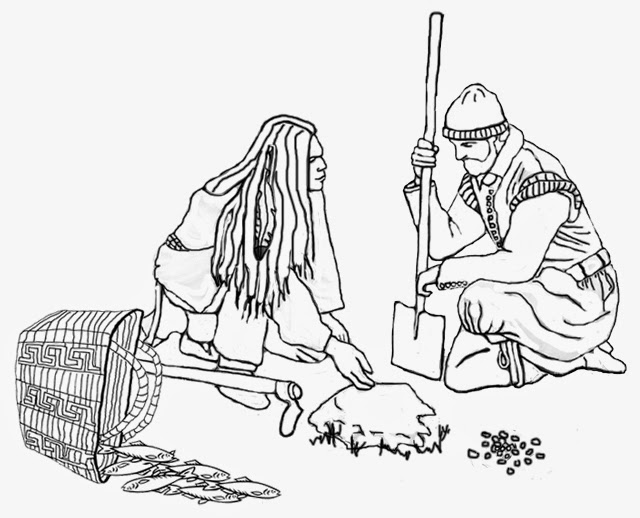 |
| http://www.manyhoops.com/children-s-recipes.html As Ben was doing all this, he said that the Native Americans used to put dead fish next to each corn plant. He looked up how much N-P-K is in a dead fish (apparently there are websites where you can look up the elements in a whole bunch of things). He found out that it's almost identical to what they had planned to apply. Pretty cool! They constructed two wagons to transport the fertilizer, and they thought about painting on the side of them, "We put a fish by every seed!" |
Monday, May 5, 2014
Five reasons why you should plant a garden THIS year.
It’s not too late! I highly recommend that everyone plant a garden. Anyone who knows me
will probably laugh at that, because I am probably the last person they’d call
a gardener.
That’s right, no green thumb on this girl. I could blame it on any number of things (too busy, too hard with a
baby, we never did it while I was growing up, etc.). Truth is, I’m really just
not that into it. I do have a couple past experiences that have left me with a
bad taste in my mouth, but they are funny to recount.
Story #1 - First was when I took the initiative to plant my own garden during junior high. Except, planting it was about all I did. The weeds took over and I don’t think I ever ate a single thing from it. I still feel guilty over all the wasted potential of those poor little seeds.
Story #2 - The second memorable experience was the COMPLETE opposite. It was our first full summer in our house. Ben LOVES to plant and grow things. He also likes to do nearly every project to an extreme measure. I should have known I needed to reign in this new “project.” He prepared the area with humungous tractor and a moldboard plow, which means it was a huge area. And we filled up the whole thing. We were in way over our heads. Then it came time to harvest, and we were swimming in produce. The biggest irony is that Ben doesn’t eat ANY vegetables, so he just kept saying we should put a “free pick-your-own produce” sign out by the road. That’s when I made him promise that we would only maintain our fruit from then on (apple, peach, pear trees, grapes, strawberries, raspberries, etc.).
LOTS of salsa from Story #2.
Did you know there's a "Sneak some zucchini onto your neighbor's porch day?" Plant some and you'll find out why!


I am learning to like it though. I've hesitantly agreed to do a garden again this year. And for all these reasons, I encourage
you to plant a garden of some kind.
- Therapeutic – Hobbies are so enjoyable and really
enrich one’s life. Gardening is a great hobby that also provides delicious and
nutritious benefits. If you live in Wisconsin like me, you’ve just been stuck
up in the house for a nasty winter. What better way to replenish your Vitamin
D.
- Social/Family Activity – We are always looking for things that are fun for Rose (4 years) but do-able with Molly (8 months). I think it's going to be a fun activity for us this summer. When it comes time to harvest the produce, any canning or other preservation is much more fun to do with friends.
- Appreciation/Understanding – Nurturing plants is a great way to gain appreciation and understanding for the world we live in. Selfishly, I also think it
creates a better sense of appreciation of full-scale farms, because they are
gardening but on a much, much larger scale. When you see how the drought weeks
of July stress out your lettuce, how ridiculously persistent the weeds are, or
how devastating an untreated potato bug infestation can be on all your hard
work, you’ll get a glimpse of what is happening across every single farm field.
- Tasty – There’s something to be said about
learning when the ideal time is to pick produce and eat it that very same day.
Nothing compares.
- No harm done – Don’t let gardening failure get you down, like it did to me. Just learn from it so you can do better next time. I learned that smaller is better, so we prioritize what would be a good to plant versus something we don’t really care to eat. Yes, it does feel sad to let the plants get choked out by weeds or let the produce be wasted because you can’t even get it to a food pantry in time, but it’s even beneficial as compost. So there’s really no harm.
No excuses. It doesn’t have to take a lot of time if you want to do a
really small little plot or even an herb garden. The seeds come with planting
instructions on the back. Just give it a shot and see what happens.
Subscribe to:
Posts (Atom)